What are the Best Eye Creams for Dry Skin
If the skin around your eyes feels tight, looks flaky, or shows fine lines earlier than expected, dry skin is likely the cause. The eye area has far fewer oil glands than the rest of your face, making it one of the first places to show dehydration. More people are searching for targeted solutions because regular moisturizers often aren’t enough — and the wrong product can sting or irritate this delicate zone.
Table of Contents
What Makes Eye Creams Different From Regular Moisturizers
Eye creams are not just face creams in smaller packaging. The formulas are specifically designed for the periorbital area — the thin, fragile skin that surrounds your eyes.
They typically contain higher concentrations of humectants (like hyaluronic acid and glycerin) to pull moisture into the skin, along with emollients and occlusives (like ceramides, squalane, and shea butter) to seal that moisture in. For dry skin specifically, you want products that do all three: attract water, retain it, and reinforce the skin barrier over time.
This is a long-game strategy. Eye creams work gradually — most people notice real improvement after 4 to 8 weeks of consistent use.

Key Benefits of Using an Eye Cream Formulated for Dry Skin
- Restores the skin barrier — helps skin hold onto water instead of losing it through the surface
- Reduces the appearance of fine lines caused by dehydration — not the same as erasing wrinkles, but visible improvement is realistic
- Prevents flakiness and tightness — especially important in cold, low-humidity climates
- Soothes sensitivity — dry skin is often reactive skin; a good eye cream calms as it hydrates
- Supports long-term skin resilience — regular use helps maintain the skin’s natural protective function
Best Eye Creams for Dry Skin
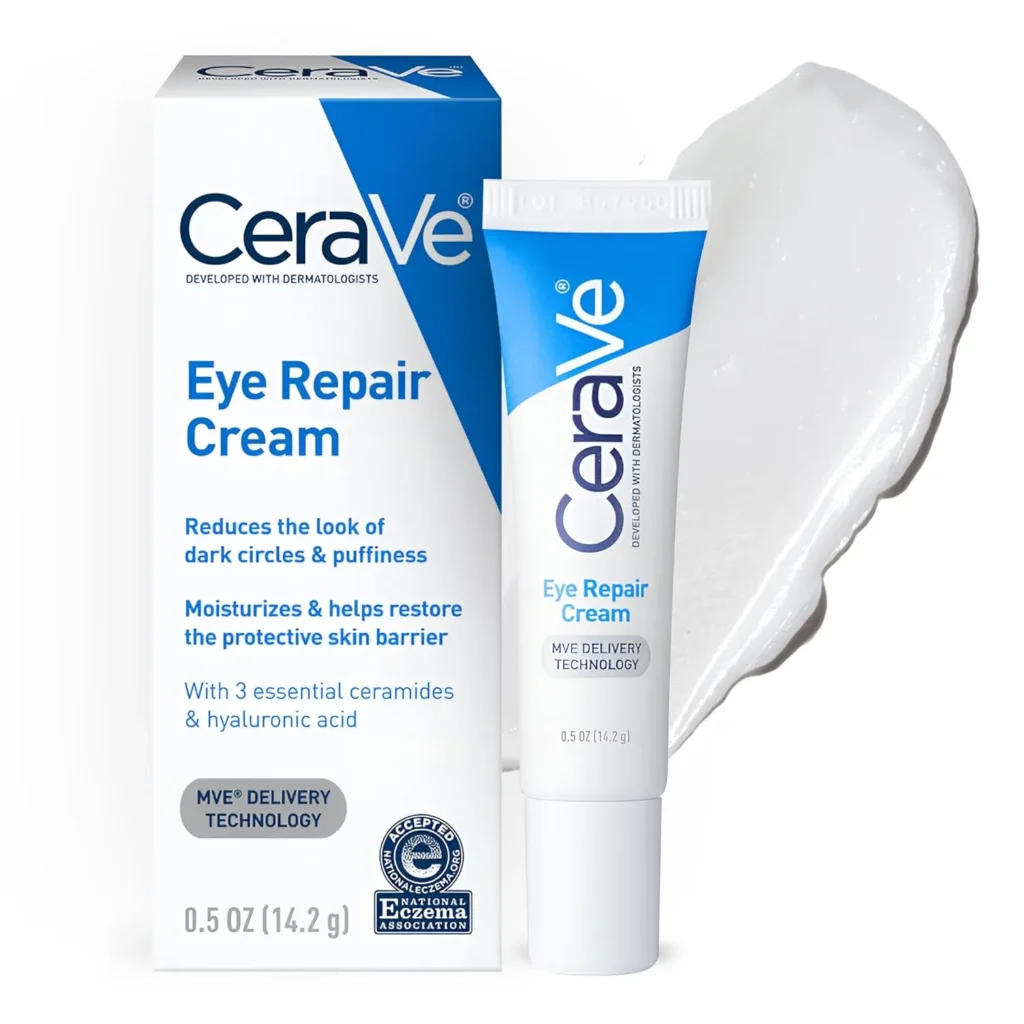
1. CeraVe Eye Repair Cream
Country of origin: USA Best for: Severely dry, sensitive, or compromised skin barrier
CeraVe’s Eye Repair Cream relies on its signature blend of three essential ceramides (1, 3, and 6-II) alongside hyaluronic acid and niacinamide. Ceramides are lipids naturally found in your skin — when they’re depleted, the skin loses moisture rapidly. This formula works by replenishing those ceramides, essentially patching the barrier.
Pros:
- Fragrance-free and non-comedogenic
- Developed with dermatologists; safe for sensitive skin
- Very affordable; widely available
- Works under makeup without pilling
Cons:
- No significant brightening effect for dark circles
- Texture may feel slightly heavy in humid climates
- Results are subtle and slow — not for those wanting fast visible change
A consistent daily routine with this cream can noticeably reduce dryness and irritation around the eyes within a few weeks.
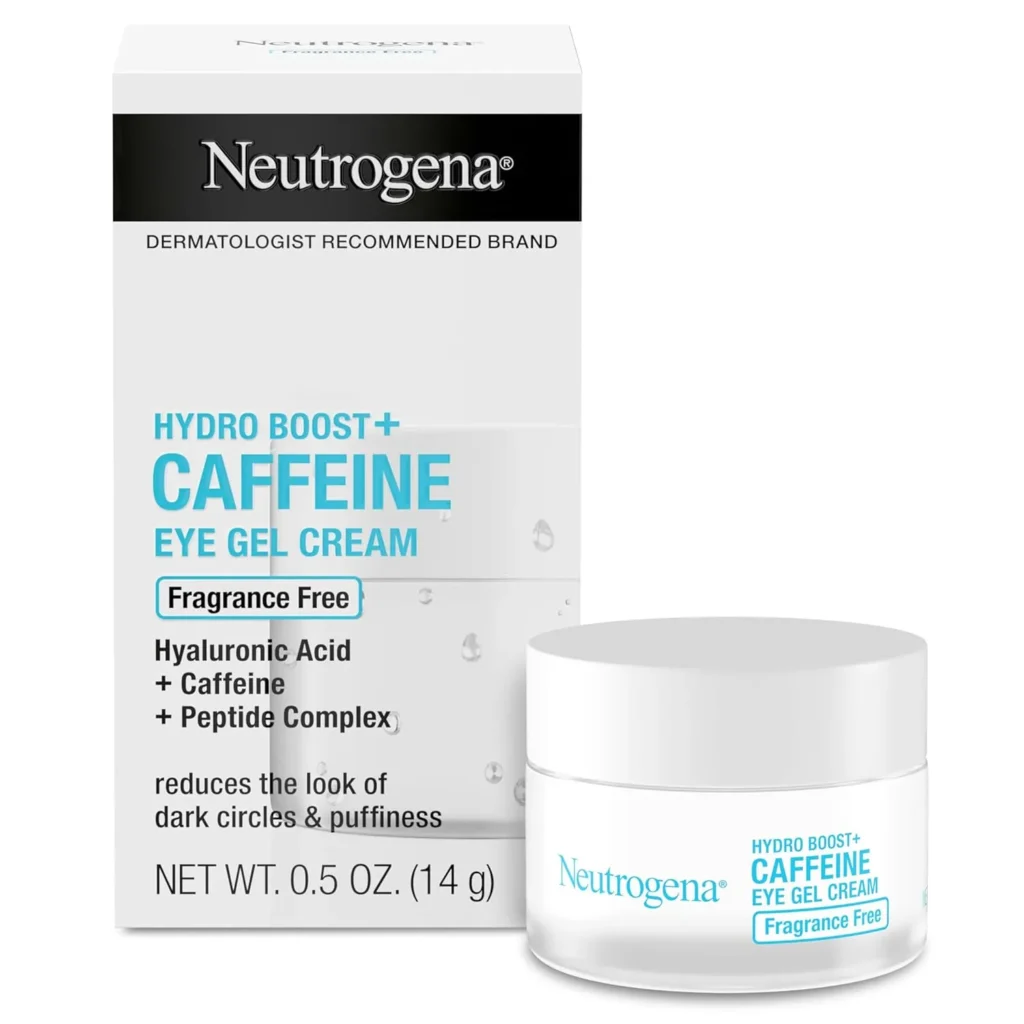
2. Neutrogena Hydro Boost Eye Gel-Cream
Country of origin: USA Best for: Dry skin that also looks dull or puffy in the morning
This gel-cream is built around hyaluronic acid — specifically a formula designed to hold up to 1,000 times its weight in water. The lightweight gel texture absorbs quickly, making it one of the few eye creams comfortable to wear both morning and night.
Pros:
- Fast-absorbing; doesn’t leave a greasy film
- Immediately plumps fine lines caused by dehydration
- Ophthalmologist-tested; safe for contact lens wearers
- Works well in layering routines (fine under SPF)
Cons:
- Less effective for very dry or flaky skin (lacks heavier emollients)
- No ceramides — barrier repair is more limited
- Some users with extremely dry skin may need a heavier formula on top
If you want a no-fuss, lightweight option that delivers real hydration without heaviness, this is a reliable everyday choice.
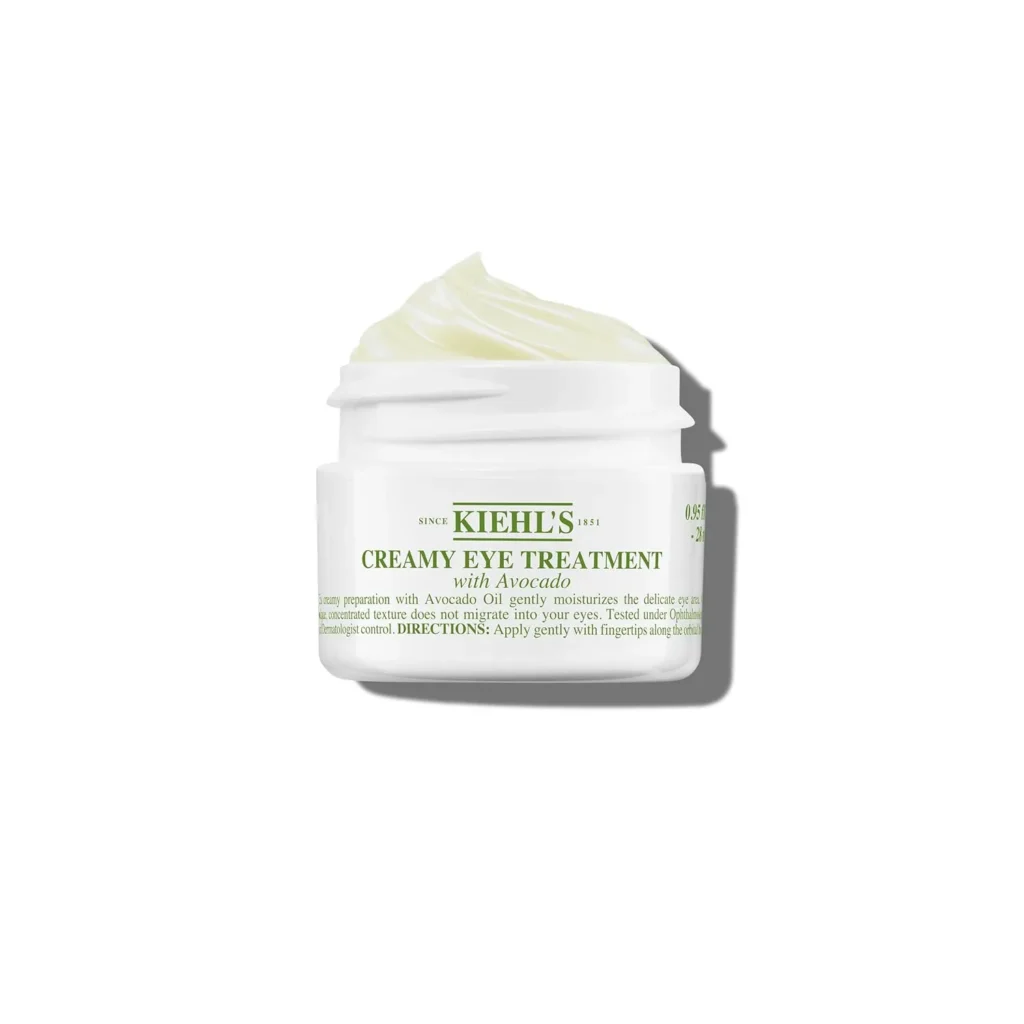
3. Kiehl’s Creamy Eye Treatment with Avocado
Country of origin: USA Best for: Very dry, mature, or texture-prone skin around the eyes
Kiehl’s takes a richer approach with avocado oil as its core ingredient — a natural source of oleic acid, vitamins A and E, and fatty acids that closely mimic the skin’s own lipids. It also contains beta-carotene and shea butter, making it one of the more nourishing formulas in this category.
Pros:
- Rich, cushiony texture that melts into dry skin
- Excellent for nighttime use or dry winter months
- Noticeably reduces tightness and rough texture
- Long-standing product with strong user trust
Cons:
- Too heavy for daytime use under makeup for most skin types
- Premium price point
- May not suit those prone to milia (small white bumps) around the eyes
This is a particularly good option for anyone whose eye area feels rough or looks dull rather than just dehydrated.
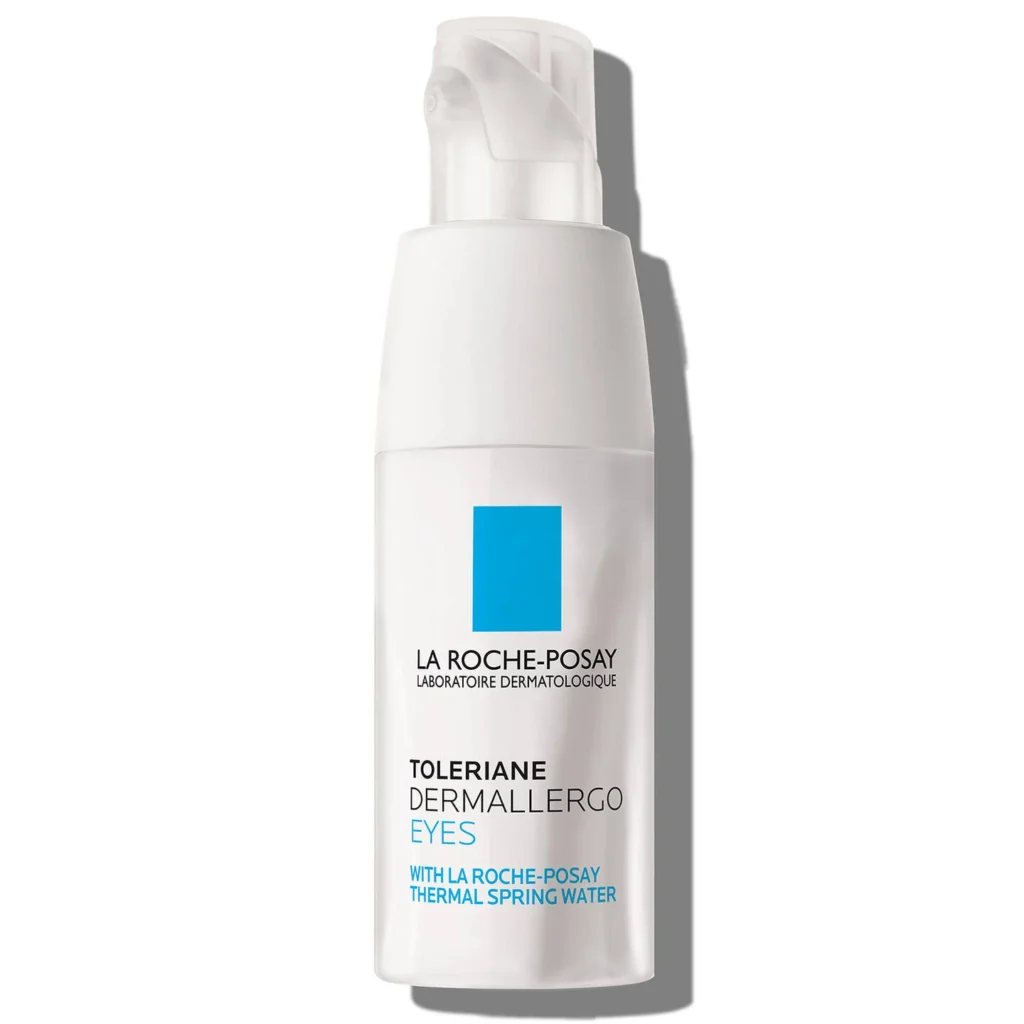
4. La Roche-Posay Toleriane Ultra Eye Cream
Country of origin: France Best for: Dry, reactive, or allergy-prone skin
La Roche-Posay is a French dermo-cosmetic brand well regarded in dermatology. Their Toleriane Ultra Eye Cream uses a thermal spring water base enriched with neurosensine (a soothing peptide), glycerin, and shea butter — specifically designed to calm reactive skin while restoring comfort.
Pros:
- Clinically tested on intolerant, reactive skin
- Minimal ingredient list reduces irritation risk
- Soothes redness and sensitivity alongside dryness
- Preservative-free formula (important for very reactive skin)
Cons:
- Smaller tube size for the price
- Not widely available in all markets
- No specific anti-aging actives (if that’s a priority, you’d need additional products)
For anyone who has reacted to other eye creams, this is a well-founded first choice.
Simple Application Routine
Morning:
- After cleansing and applying any toner or serum, wait 30 seconds for absorption.
- Use your ring finger — it applies the least pressure of any finger.
- Dispense a pea-sized amount and warm it slightly between fingertips.
- Gently pat (never rub) along the orbital bone, starting from the inner corner.
- Let it absorb for 60 seconds before applying SPF or makeup.
Evening:
- After double-cleansing (remove makeup thoroughly first), apply your thickest eye cream at night.
- Pat gently around the full eye area, including the upper lid if the formula is eye-safe.
- Avoid pulling or stretching the skin — always press and release.
One important rule: less is more. Overapplying often leads to product migrating into the eye, causing irritation.
How to Choose the Right Eye Cream for Your Specific Needs
If your skin is dry and sensitive: Look for fragrance-free formulas with ceramides and minimal actives. CeraVe and La Roche-Posay are well-matched.
If your skin is dry and you want anti-aging support: Prioritize peptides and retinol alternatives (like bakuchiol). Ensure any retinol formula is specifically eye-safe.
If your skin is dry but you want a lightweight feel: A gel-cream like Neutrogena Hydro Boost offers hydration without heaviness — just layer with a richer product at night if needed.
If your skin is dry and mature: Richer textures with fatty acids (avocado, squalane, shea) will feel more comfortable and deliver more visible results.
FAQ
Can I use my regular face moisturizer around my eyes instead? You can, but face moisturizers often contain stronger actives, fragrances, or thicker occlusive agents that may irritate the eye area. A dedicated eye cream is formulated for that skin’s thinner, more reactive nature.
How long before I see results? Most people notice hydration improvement within a week. Visible changes to fine lines or texture typically take 4 to 8 weeks of daily use.
Is it safe to use eye cream on the eyelids? Not all formulas are lid-safe. Check the product’s instructions. Most eye creams are designed for the orbital bone area (just under the lower lash line, up to the brow bone), not directly on the moving eyelid.
Should I use eye cream morning and night? Yes, if possible. Morning application helps protect and prepare the skin; nighttime application allows heavier formulas to work without makeup interference.
Can eye cream cause milia (small white bumps)? It can, particularly with very rich formulas if you apply product too close to the lash line. Stick to light patting along the orbital bone rather than directly under the eye or on the lid.
Final Thoughts
Dry skin around the eyes is common, manageable, and largely responsive to the right routine. None of the products above will transform your skin overnight — and any brand that promises otherwise deserves skepticism.
What they will do, used consistently over weeks, is meaningfully improve how that area feels and looks. The goal isn’t perfection; it’s skin that’s comfortable, hydrated, and resilient.
Start with one product suited to your skin type, give it 6 to 8 weeks before judging results, and resist the urge to layer multiple active products at once in a sensitive area.
Disclaimer: Individual results vary depending on skin type, age, climate, overall skincare routine, and consistency of use. This article is for informational purposes and does not constitute medical advice. If you have persistent skin concerns, consider consulting a board-certified dermatologist.