What is the Best makeup primer for dry skin
Dry skin and makeup don’t always get along. Foundation can cling to flaky patches, settle into fine lines, and look cakey by midday. If you’ve struggled with this, you’re not alone—searches for makeup primers designed for dry skin have surged as more people realize that hydration is the foundation of flawless makeup. A good primer creates a smooth, moisturized base that helps your makeup glide on evenly and last longer without emphasizing dryness.
Table of Contents
What Makes Primers for Dry Skin Different
Unlike mattifying primers designed for oily skin, primers for dry skin focus on hydration and nourishment. They typically contain humectants like hyaluronic acid or glycerin that draw moisture into the skin, along with emollients like squalane or oils that create a smooth surface.
The best primers do double duty: they prep your skin for makeup while delivering skincare benefits. Over time, using a hydrating primer can actually improve your skin’s texture and moisture barrier, making makeup application easier even on bare skin.
Key Benefits of Using a Hydrating Primer
- Prevents makeup from clinging to dry patches and flaky areas
- Extends foundation wear without the drying effect of silicone-heavy formulas
- Smooths fine lines by filling them with moisture rather than silicone alone
- Adds a natural glow that looks like healthy skin, not oil
- Protects skin barrier with ingredients that support long-term hydration
Best Makeup Primers for Dry Skin
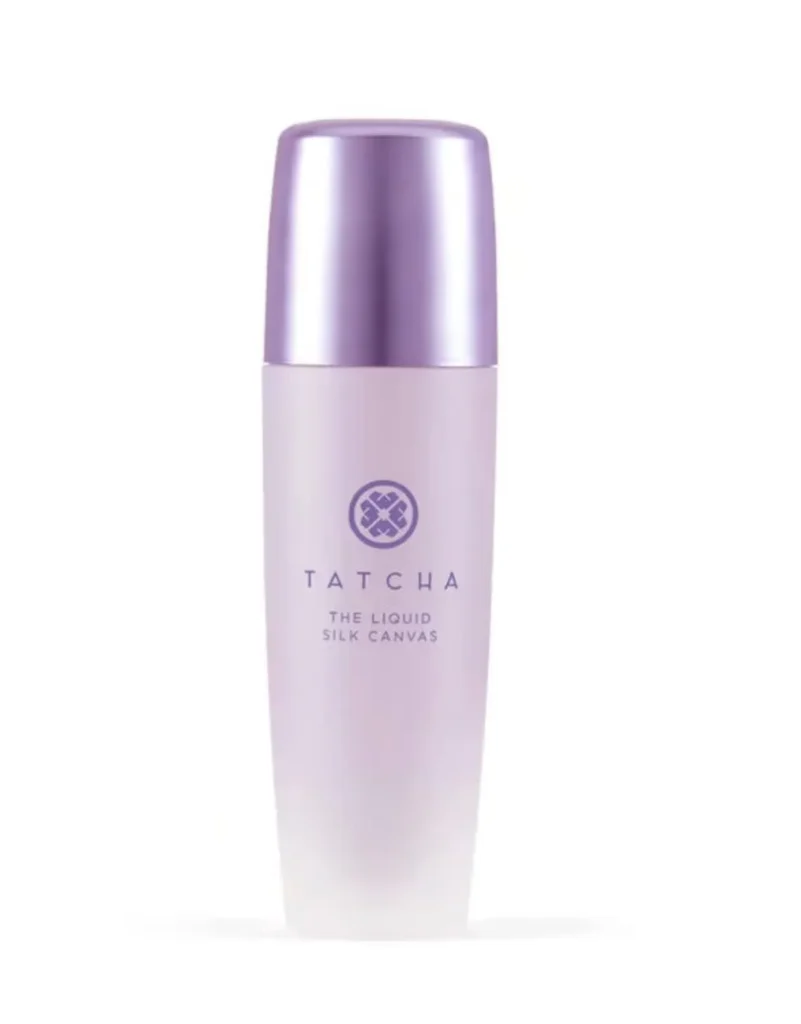
1. Tatcha The Silk Canvas Protective Primer (Japan)
Best for: Combination-dry skin that needs both smoothing and hydration
This primer uses a blend of silk extracts and botanical oils to create a velvety-smooth base. The formula contains hadasei-3, a trio of anti-aging Japanese superfoods that support skin resilience while the silk powder provides a soft-focus effect.
Pros:
- Silky texture that doesn’t feel heavy
- Works well under most foundations
- Contains beneficial skincare ingredients
Cons:
- Higher price point
- May be too rich for very oily T-zones
If you’re looking for a luxurious primer that treats your skin while prepping it, this is worth considering for special occasions or daily use.
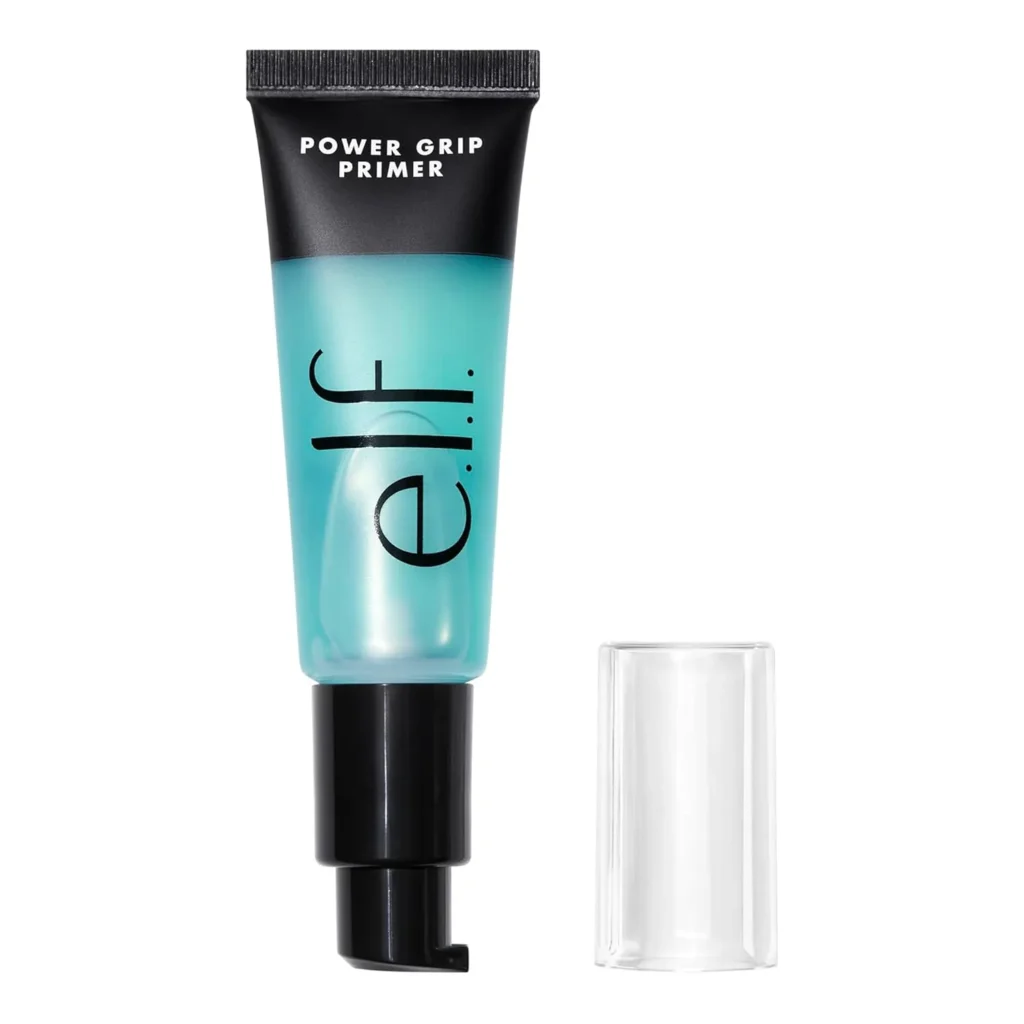
2. e.l.f. Power Grip Primer (USA)
Best for: Very dry skin that needs maximum grip and hydration
This gel-based primer has a sticky texture (in the best way) that helps foundation adhere to dry skin. With hyaluronic acid as a key ingredient, it delivers serious hydration while creating a tacky base that makeup clings to rather than sliding around.
Pros:
- Extremely affordable
- Genuinely helps makeup last longer
- Fragrance-free formula
Cons:
- Tacky texture isn’t for everyone
- Needs a moment to set before foundation
This is an excellent budget option that performs as well as primers three times its price—especially if your main concern is keeping makeup in place on dry skin.
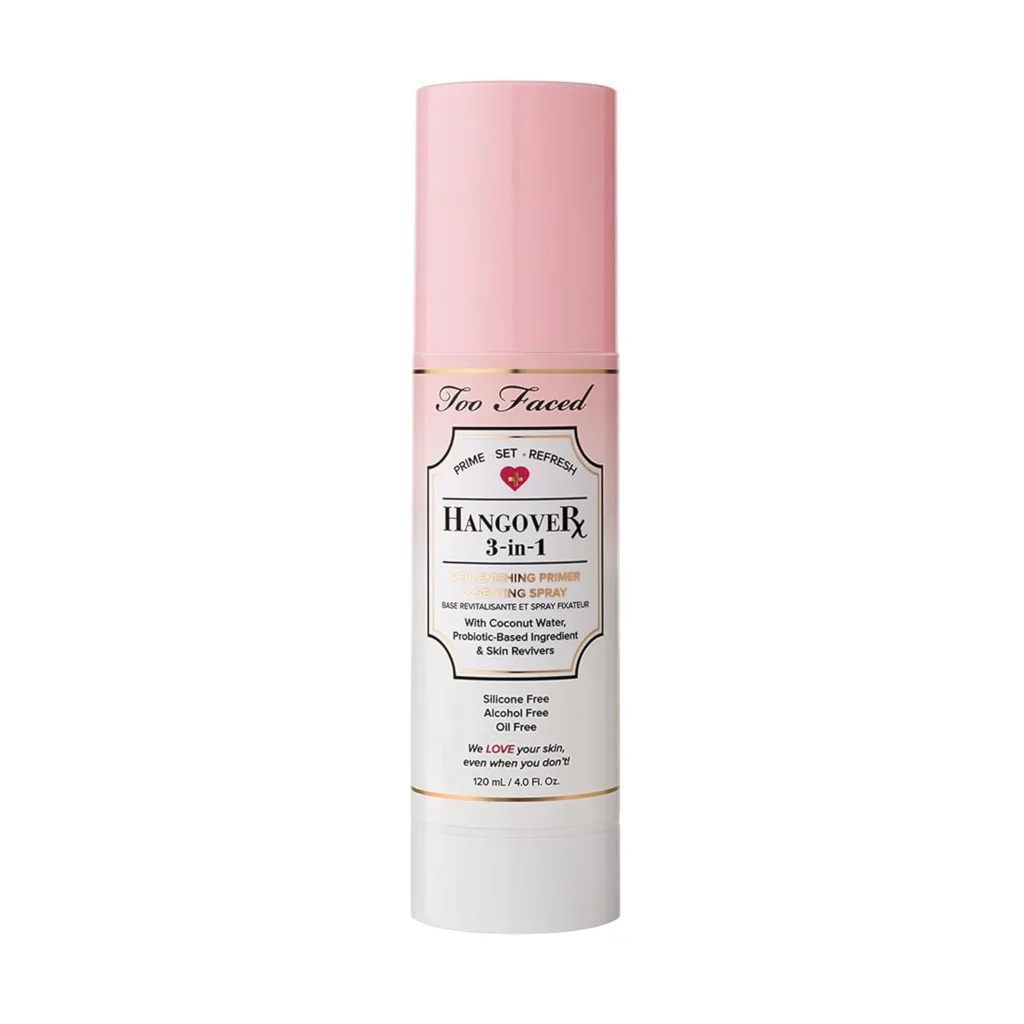
3. Too Faced Hangover Replenishing Face Primer (USA)
Best for: Dehydrated skin that looks dull and tired
Coconut water is the star ingredient here, providing an instant hydration boost. The lightweight, milky formula absorbs quickly and leaves skin feeling plump and refreshed. It’s particularly good for days when your skin looks tired or stressed.
Pros:
- Pleasant coconut scent (subtle, not overwhelming)
- Genuinely refreshing on skin
- Works well with cream and liquid foundations
Cons:
- May not provide enough grip for very oily areas
- Scent might bother sensitive noses
If your dry skin also tends to look lackluster, this primer adds both moisture and a healthy-looking radiance.
4. Milk Makeup Hydro Grip + Glow Primer (USA)
Best for: Dry skin that wants dewiness without shimmer
This primer combines the grip of a tacky primer with blue agave extract, hemp-derived cannabis seed extract, and hyaluronic acid for hydration. It gives a natural glow that comes from within rather than glitter particles.
Pros:
- Creates a dewy finish without greasiness
- Helps makeup melt into skin
- Clean beauty formula
Cons:
- Premium pricing
- The glow may be too much for formal settings
For those who love the glazed-skin trend, this primer delivers moisture and luminosity without making you look shiny.
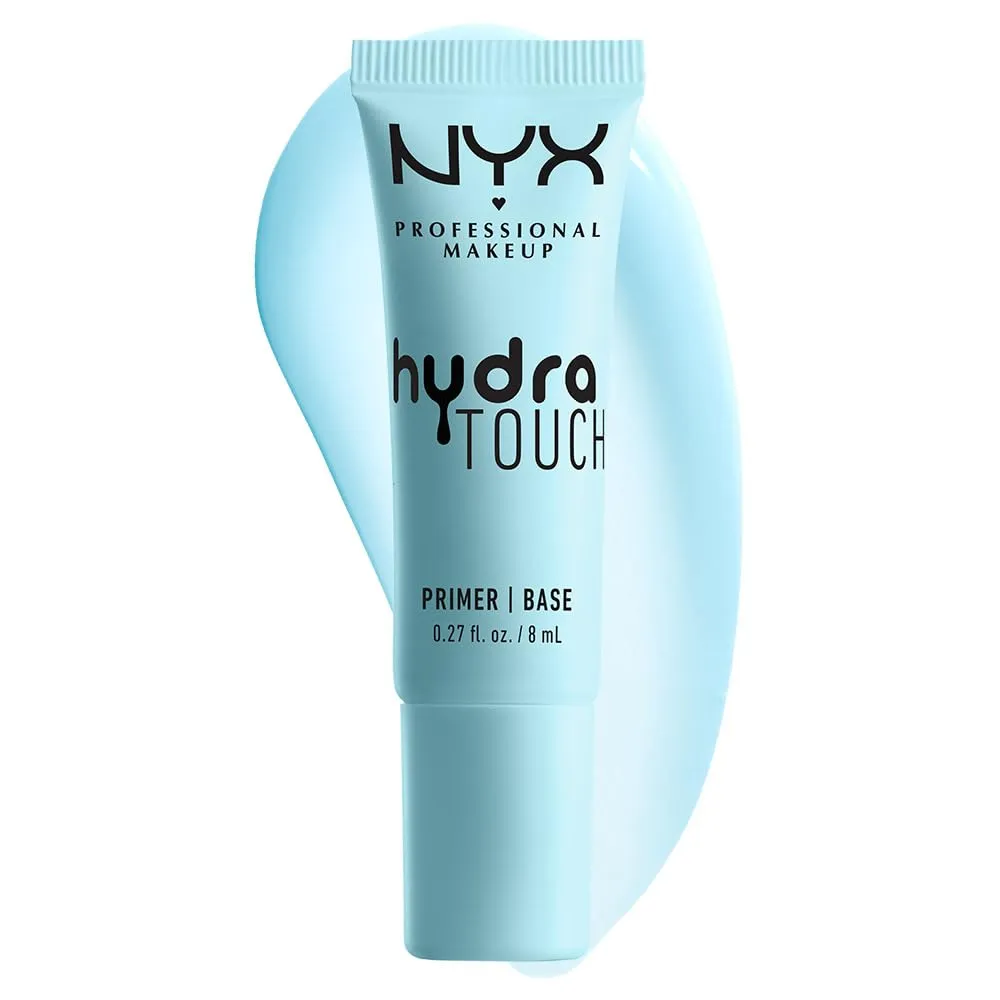
5. NYX Professional Makeup Hydra Touch Primer (USA)
Best for: Budget-conscious shoppers with moderately dry skin
This silicone-based primer includes hydrating ingredients like chamomile and aloe. It’s a middle-ground option that provides slip for foundation while offering some moisture benefits.
Pros:
- Drugstore price point
- Widely available
- Silky application
Cons:
- Not as hydrating as gel-based options
- May require additional moisturizer underneath
If you’re new to primers or want to test the waters without spending much, this is a solid starter option.
How to Apply Primer for Best Results
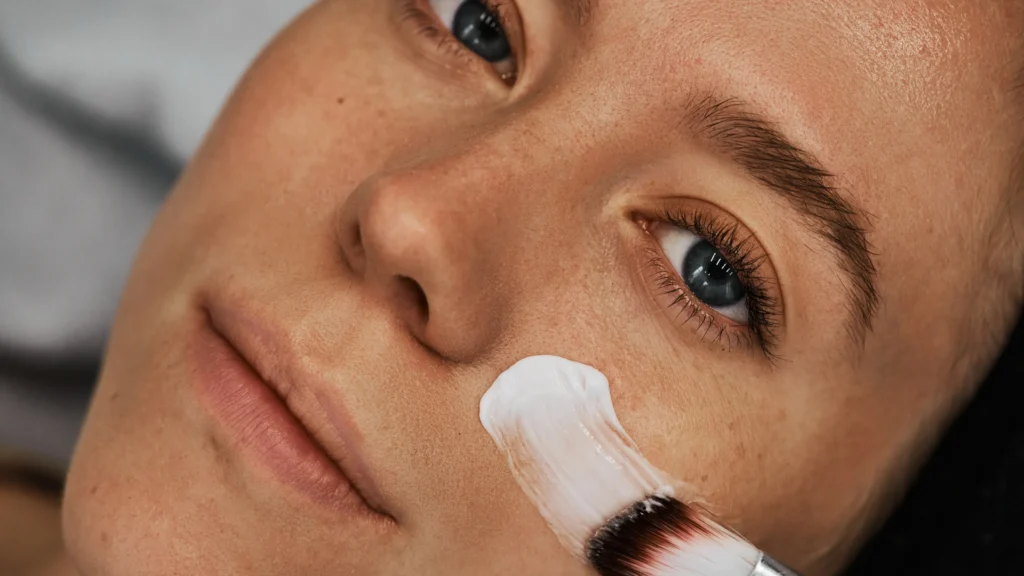
Step 1: Start with clean, moisturized skin. Let your moisturizer absorb for 2-3 minutes.
Step 2: Apply a pea-sized amount of primer to the center of your face.
Step 3: Gently press and pat the primer into skin using your fingertips, working outward.
Step 4: Wait 30-60 seconds before applying foundation. This allows the primer to set properly.
Step 5: Use pressing motions rather than rubbing when applying foundation over primer.
Choosing the Right Primer for Your Skin
If you have very dry, flaky skin: Choose gel-based primers with hyaluronic acid (like e.l.f. Power Grip).
If you have combination-dry skin: Look for balancing formulas that hydrate without adding too much texture (like Tatcha Silk Canvas).
If you want glow: Pick primers with light-reflecting ingredients or dewy finishes (like Milk Hydro Grip + Glow).
If you have sensitive dry skin: Opt for fragrance-free, minimal ingredient lists (like e.l.f. Power Grip).
If you’re on a budget: NYX Hydra Touch offers decent hydration at an accessible price.
Frequently Asked Questions
Can I skip moisturizer if I use a hydrating primer?
No. Primer supplements your skincare but doesn’t replace it. Always apply moisturizer first and let it absorb before priming.
Will primer make my dry patches worse?
A good hydrating primer should improve dry patches, not worsen them. If you experience more flaking, the formula may contain too much silicone or alcohol.
How much primer should I use?
A pea-sized amount is usually enough for the entire face. Using too much can cause pilling or prevent foundation from adhering properly.
Can I use primer without foundation?
Yes. Many hydrating primers work well as standalone products for a natural, smoothed-out look.
How often should I replace my primer?
Most primers last 12-18 months after opening. Check for changes in smell, texture, or separation.
Final Thoughts
The right primer can transform how makeup sits on dry skin. Rather than fighting against flakes and tight patches, a hydrating primer works with your skin to create a smooth, comfortable base.
Results vary based on your specific skin type, climate, and the foundation you pair with your primer. What works beautifully for one person might not suit another, so don’t hesitate to try samples when possible.
Consistency matters more than products. Using primer regularly, along with proper skincare, will give you better long-term results than any single product alone. Be patient with your skin and remember that makeup should enhance how you already look—not cover up or fix everything.
As an Amazon Associate, I earn from qualifying purchases